


Responsible Institution: China Association for Science and Technology
Sponsor: China Ordnance Society
ISSN 1000-1093 CN 11-2176/TJ
Sponsor: China Ordnance Society
ISSN 1000-1093 CN 11-2176/TJ
Acta Armamentarii ›› 2025, Vol. 46 ›› Issue (10): 250439-.doi: 10.12382/bgxb.2025.0439
Previous Articles Next Articles
ZHONG Haoyuan1, SONG Qingguan2,3, JIANG Shengli2,4,*( ), ZHANG Lei1,**(), PANG Siping1
Received:2025-06-03
Online:2025-11-05
Contact:
JIANG Shengli, ZHANG Lei
ZHONG Haoyuan, SONG Qingguan, JIANG Shengli, ZHANG Lei, PANG Siping. Molecular Dynamics Simulation of Afterburning Reactions of Aluminum Nanoparticles in the Detonation Product Atmosphere of CL-20[J]. Acta Armamentarii, 2025, 46(10): 250439-.
Add to citation manager EndNote|Ris|BibTeX

Fig.1 Schematic diagram of model construction and reaction process
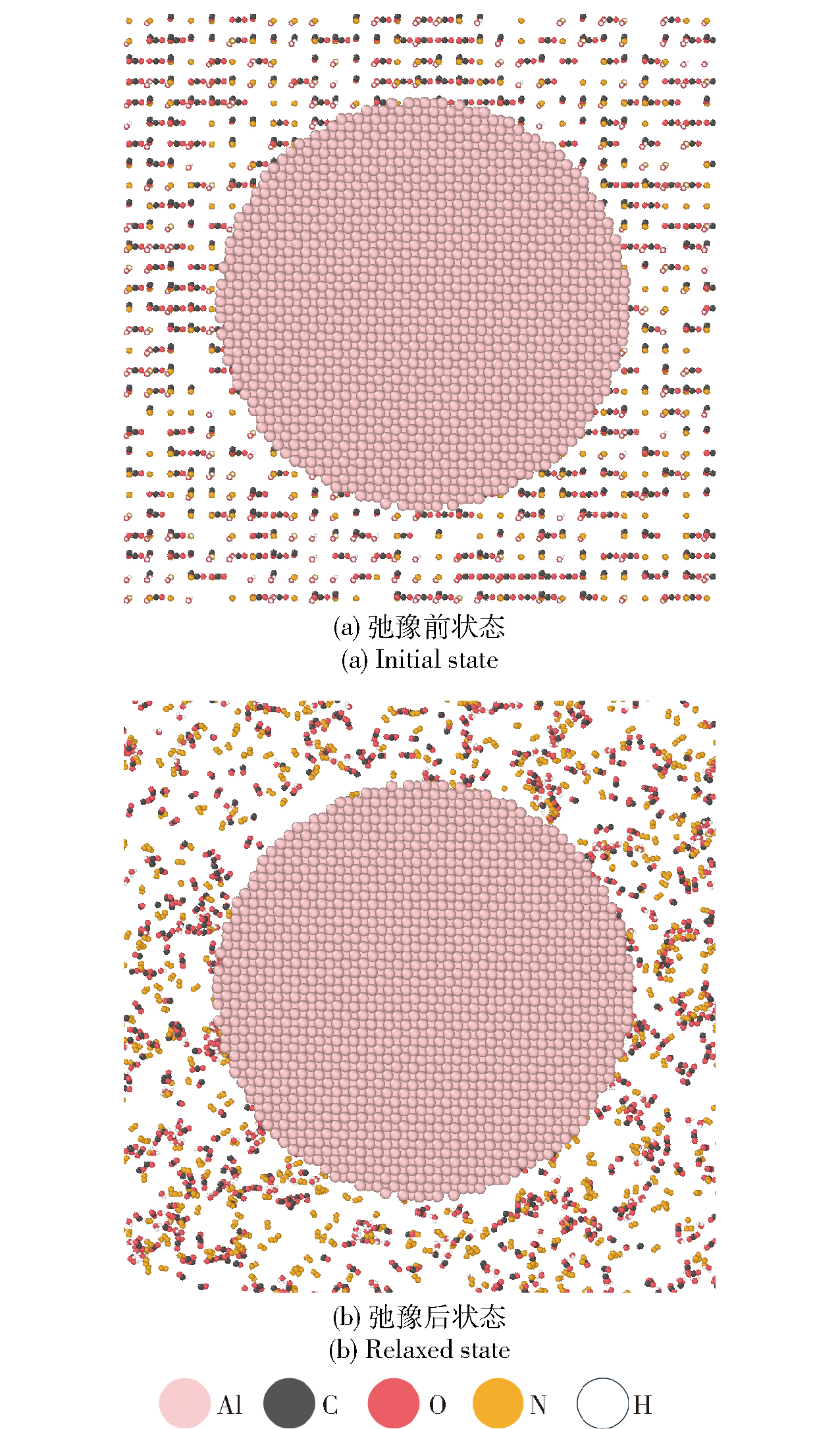
Fig.2 Schematic half-section of ANP model in a CL-20 detonation atmosphere
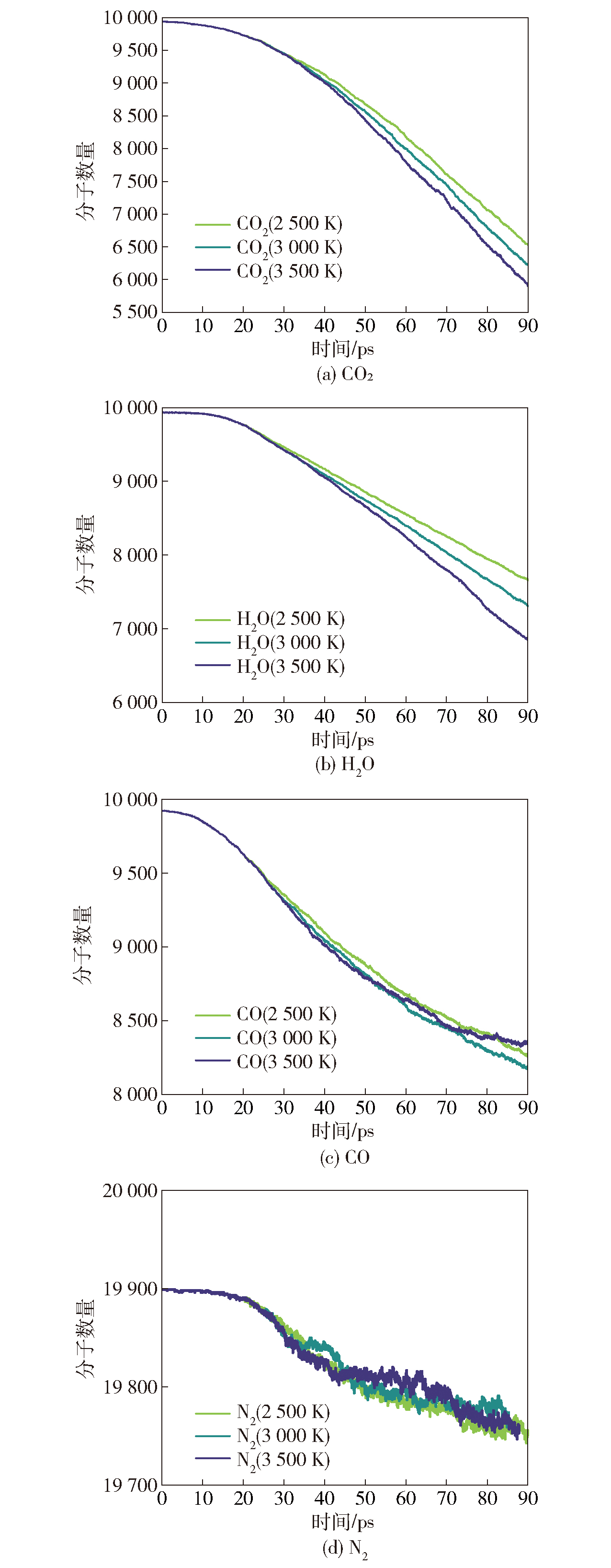
Fig.3 Evolution of the number of molecules over time at different temperatures

Fig.4 Evolution of major chemical bonds over time at different temperatures
| 温度/K | RCO/% | RCO2/% | RH2O/% | RN2/% |
|---|---|---|---|---|
| 2500 | 14.14 | 32.93 | 21.55 | 0.66 |
| 3000 | 14.22 | 38.09 | 25.86 | 0.65 |
| 3500 | 10.20 | 43.43 | 31.55 | 0.63 |
Table 1 Consumption ratios of CL-20 detonation products at different temperatures
| 温度/K | RCO/% | RCO2/% | RH2O/% | RN2/% |
|---|---|---|---|---|
| 2500 | 14.14 | 32.93 | 21.55 | 0.66 |
| 3000 | 14.22 | 38.09 | 25.86 | 0.65 |
| 3500 | 10.20 | 43.43 | 31.55 | 0.63 |
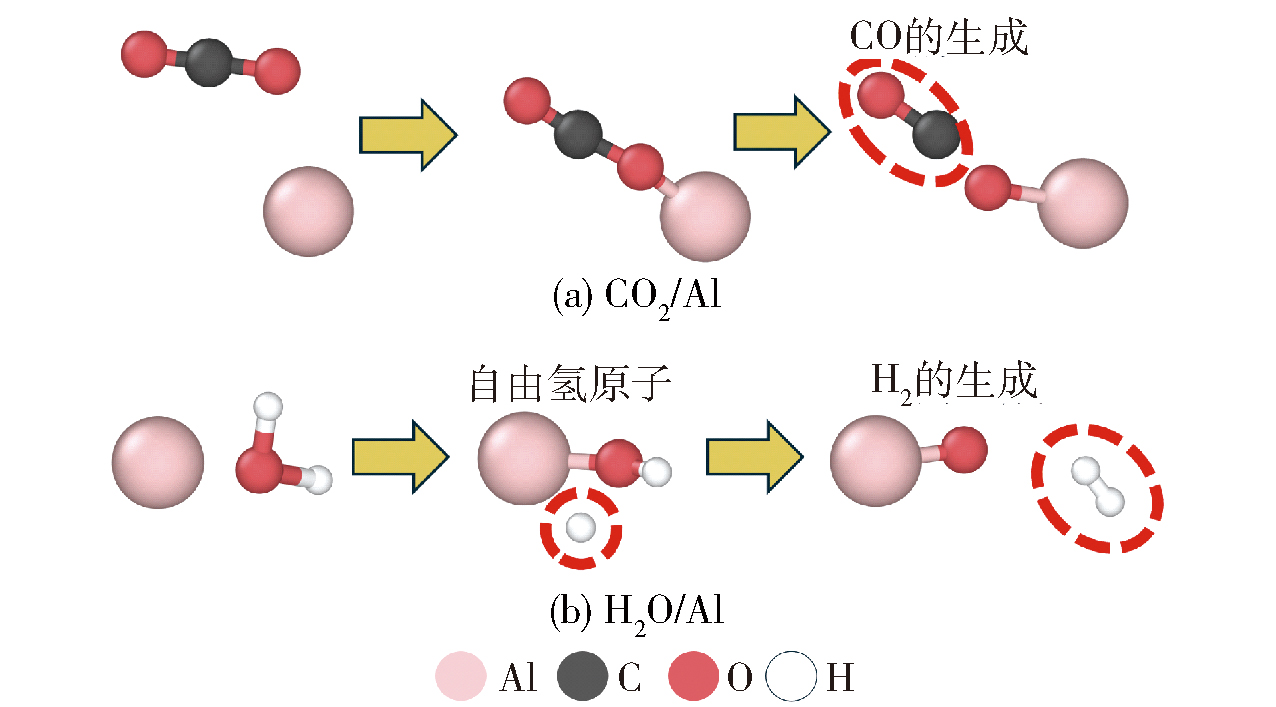
Fig.5 Reaction mechanisms of CO2 with Al and H2O with Al at 3500K
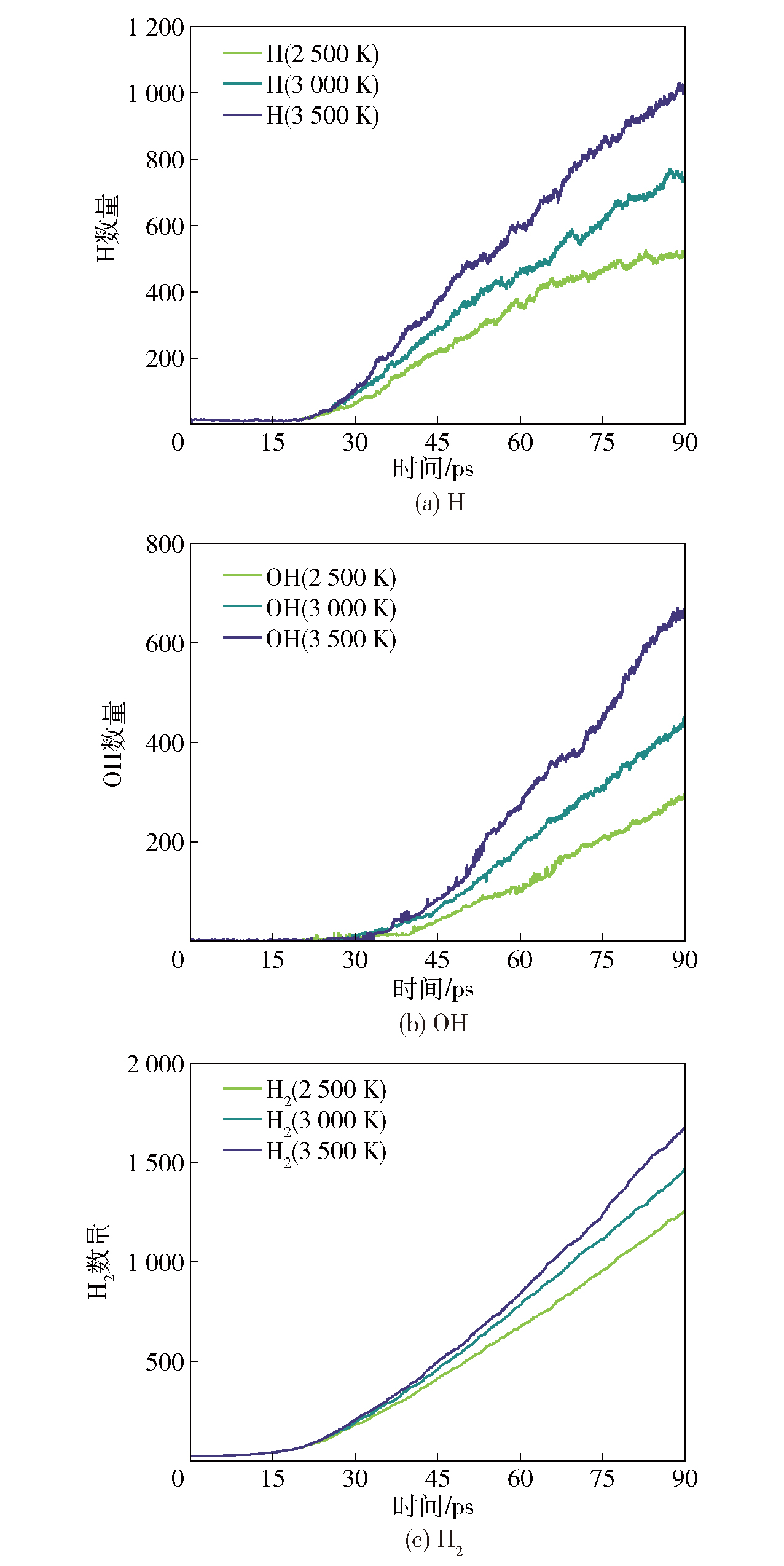
Fig.6 Evolution of H, HO, and H2 species over time at different temperatures

Fig.7 Snapshots of ANP during the temperature rise and constant-temperature reaction stages
| [1] |
蒋欣利, 张国凯, 何勇, 等. 密闭建筑温压炸药内爆炸后燃效应[J]. 兵工学报, 2024, 45(8): 2520-2530.
doi: 10.12382/bgxb.2023.0555 |
|
|
|
| [2] |
doi: 10.1016/j.combustflame.2024.113882 URL |
| [3] |
王伯良, 李亚宁, 韩志伟. 温压炸药发展趋势的几点思考[J]. 火炸药学报, 2023, 46(11): 935-936.
|
|
|
|
| [4] |
doi: 10.1016/j.powtec.2023.119087 URL |
| [5] |
刘正, 聂建新, 阚润哲, 等. 铝粉燃烧对CL-20基混合炸药水下爆炸载荷特性的影响[J]. 兵工学报, 2025, 46(3): 169-178.
|
|
|
|
| [6] |
刘海, 何远航. 梯恩梯/萘共晶初始热分解的反应分子动力学模拟[J]. 兵工学报, 2016, 37(3): 414-423.
doi: 10.3969/j.issn.1000-1093.2016.03.005 |
|
|
|
| [7] |
王成, 杨长鑫, 贾曦雨, 等. 含铝炸药深水爆炸能量输出特性高精度数值模拟研究[J]. 北京理工大学学报, 2024, 44(8): 872-878.
|
|
|
|
| [8] |
黄菊, 王伯良, 仲倩, 等. 温压炸药能量输出结构的初步研究[J]. 爆炸与冲击, 2012, 32(2): 164-168.
|
|
|
|
| [9] |
doi: 10.1002/1521-4087(200211)27:5<>1.0.CO;2-9 URL |
| [10] |
钟凯, 张朝阳. 纳米铝颗粒在不同炸药环境中氧化燃烧的分子动力学模拟[J]. 含能材料, 2023, 31(1): 48-60.
|
|
|
|
| [11] |
doi: 10.1016/j.ijhydene.2025.01.183 URL |
| [12] |
|
| [13] |
doi: 10.1016/j.apsusc.2022.152777 URL |
| [14] |
|
| [15] |
|
| [16] |
doi: 10.1021/jp004368u URL |
| [17] |
doi: 10.1021/acs.jpcc.9b03575 URL |
| [18] |
doi: 10.1021/acs.jpcc.8b09858 URL |
| [19] |
doi: 10.1016/j.actaastro.2020.07.042 URL |
| [20] |
doi: 10.1016/j.cplett.2021.138443 URL |
| [21] |
doi: 10.1039/C9RA08484C URL |
| [22] |
doi: 10.1016/j.jaap.2024.106457 URL |
| [23] |
STUKOWSKI A. Visualization and analysis of atomistic simulation data with OVITO-the open visualization tool[J]. Modelling and simulation in materials science and engineering, 2010, 18(1): 2154-2162.
|
| [24] |
doi: 10.1016/j.isci.2020.100944 URL |
| [25] |
doi: 10.1134/S0010508224060042 |
| [1] | LIU Moyan, LIU Yan, BAI Fan, YANG Li, HE Chao, WANG Hongfu, GAO Chenyu, HUANG Fenglei. Overdriven Detonation Test of CL-20-based Aluminized Explosive and Determination of Its Equation of State [J]. Acta Armamentarii, 2025, 46(6): 240382-. |
| [2] | ZHANG Haoyu, XU Yuxin, WANG Yuewen, WU Zongya, XU Peng. Influence of Aluminum Powder Content on the Energy Output Characteristics of RDX-based Aluminized Explosives during Air Blasting [J]. Acta Armamentarii, 2025, 46(11): 250254-. |
| [3] | LING Jing, LIANG Yanxiang, JING Lin. Dynamic Impact Mechanics Response and Deformation Mechanisms of Al15(CoCrFeNi)85 High-entropy Alloy [J]. Acta Armamentarii, 2025, 46(10): 250499-. |
| [4] | WU Junying, LI Junjian, SHANG Yiping, YANG Lijun, CHEN Lang. Large-scale Molecular Dynamics Simulation of Femtosecond Laser Pulse Ablation on TATB [J]. Acta Armamentarii, 2024, 45(7): 2351-2363. |
| [5] | LIU Hai, HE Yuan-hang. Initial Thermal Decomposition of TNT/C10H8 Cocrystal: Reactive Molecular Dynamics Simulations [J]. Acta Armamentarii, 2016, 37(3): 414-423. |
| [6] | REN Xiao-ting, YE Dan-yang, DING Ning, HE Jin-xuan, LU Yan-hua, LEI Qing, GUO Ying-yuan. A Molecular Dynamics Simulation of Solvent Effects on the Crystal Morphology of FOX-7 [J]. Acta Armamentarii, 2015, 36(2): 272-278. |
| [7] | ZHA Ming-xia, MA Zhen-ye, XU Juan, QIN Hong, XU Si-yu, ZHAO Feng-qi. Preparation of Aluminum Nanoparticles by Liquid Chemical Method and Their Characterization [J]. Acta Armamentarii, 2014, 35(10): 1575-1580. |
| [8] | QI Xiao-fei1, ZHANG Xiao-hong1, LI Ji-zhen1, LIU Fang-li1, SONG Zhen-wei1, ZHANG Jun-ping2. Molecular Dynamics Simulation of NC/NG Blends [J]. Acta Armamentarii, 2013, 34(1): 93-99. |
| [9] | . Effect of Al/O Ratio on Detonation Performance and Underwater Explosion of RDX-based Aluminized Explosive [J]. Acta Armamentarii, 2013, 34(1): 45-50. |
| [10] | JI Dong-kui, GAO Xiu-zhu, XIAO Chuan, WU Yong-zhong, YANG Kai. Study on Dimension Effect of Accelerating Ability and JWL Equation of State for Aluminized Explosive [J]. Acta Armamentarii, 2012, 33(5): 552-555. |
| Viewed | ||||||
|
Full text |
|
|||||
|
Abstract |
|
|||||
