


Responsible Institution: China Association for Science and Technology
Sponsor: China Ordnance Society
ISSN 1000-1093 CN 11-2176/TJ
Sponsor: China Ordnance Society
ISSN 1000-1093 CN 11-2176/TJ
Acta Armamentarii ›› 2025, Vol. 46 ›› Issue (11): 250146-.doi: 10.12382/bgxb.2025.0146
Previous Articles Next Articles
ZHAO Zichen, XIAO Haodong, LING Huanzhang*( )
)
Received:2025-03-06
Online:2025-11-27
Contact:
LING Huanzhang
ZHAO Zichen, XIAO Haodong, LING Huanzhang. Lightweight Infrared Small Target Detection Model Based on YOLOv10n[J]. Acta Armamentarii, 2025, 46(11): 250146-.
Add to citation manager EndNote|Ris|BibTeX
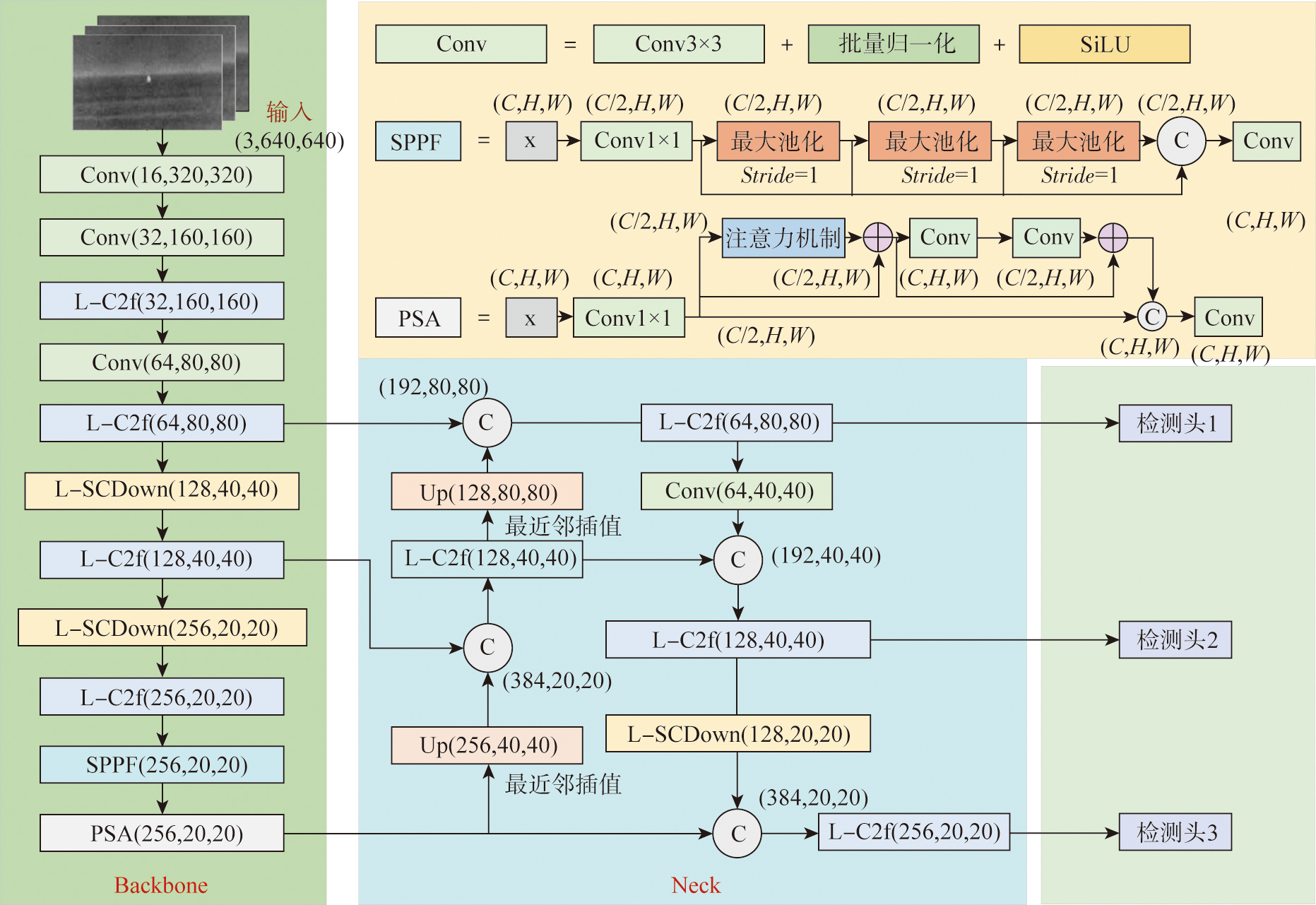
Fig.1 Network structure of L-YOLOv10n
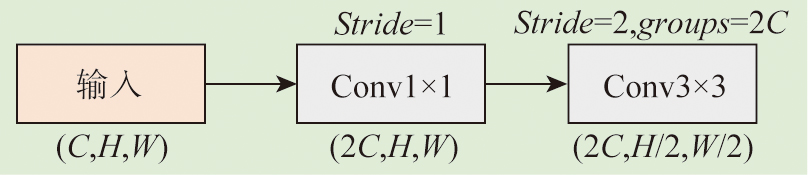
Fig.2 Network structure of SCDown
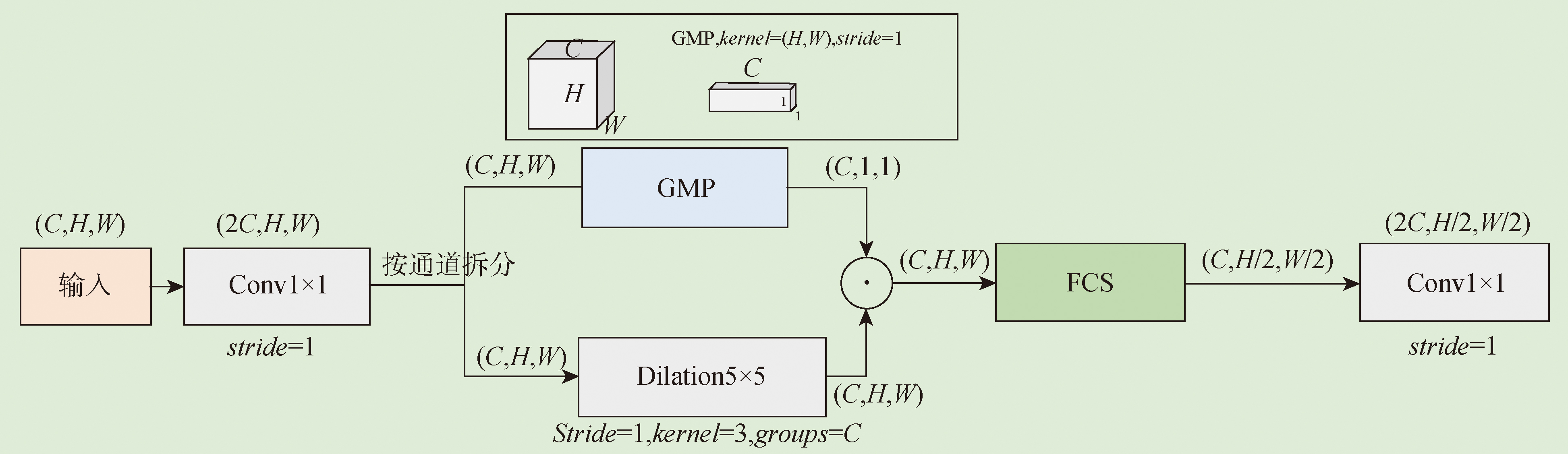
Fig.3 Network structure of L-SCDown
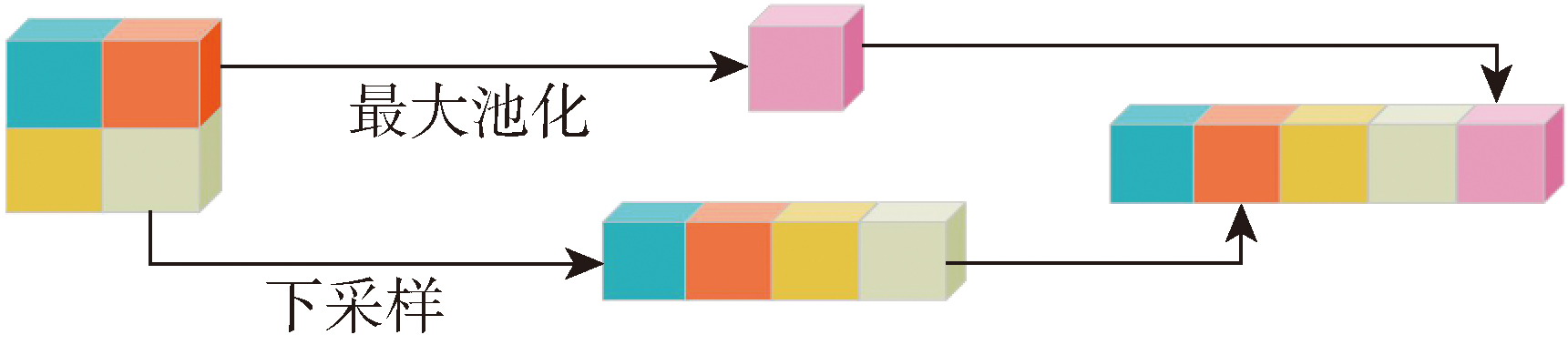
Fig.4 Structure of FCS
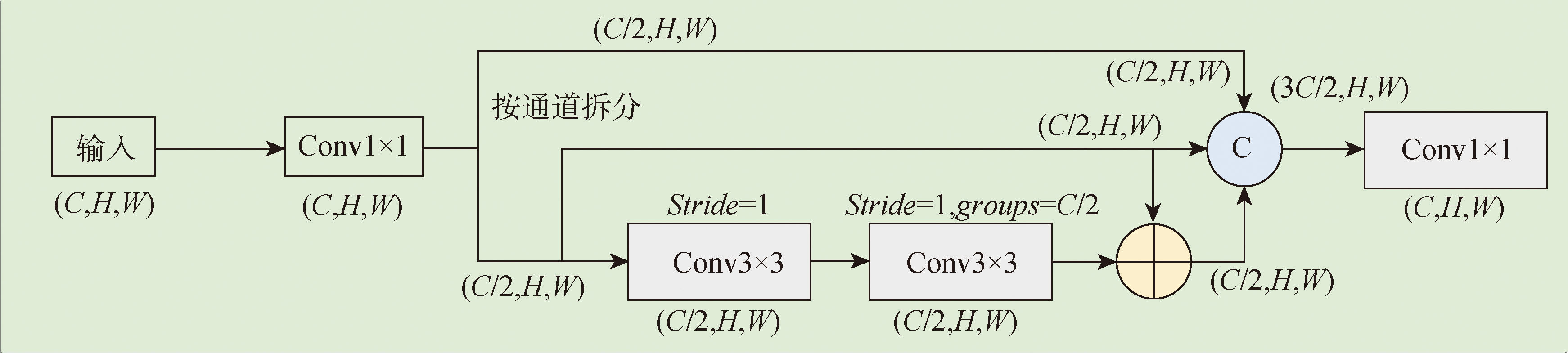
Fig.5 Network structure of C2f
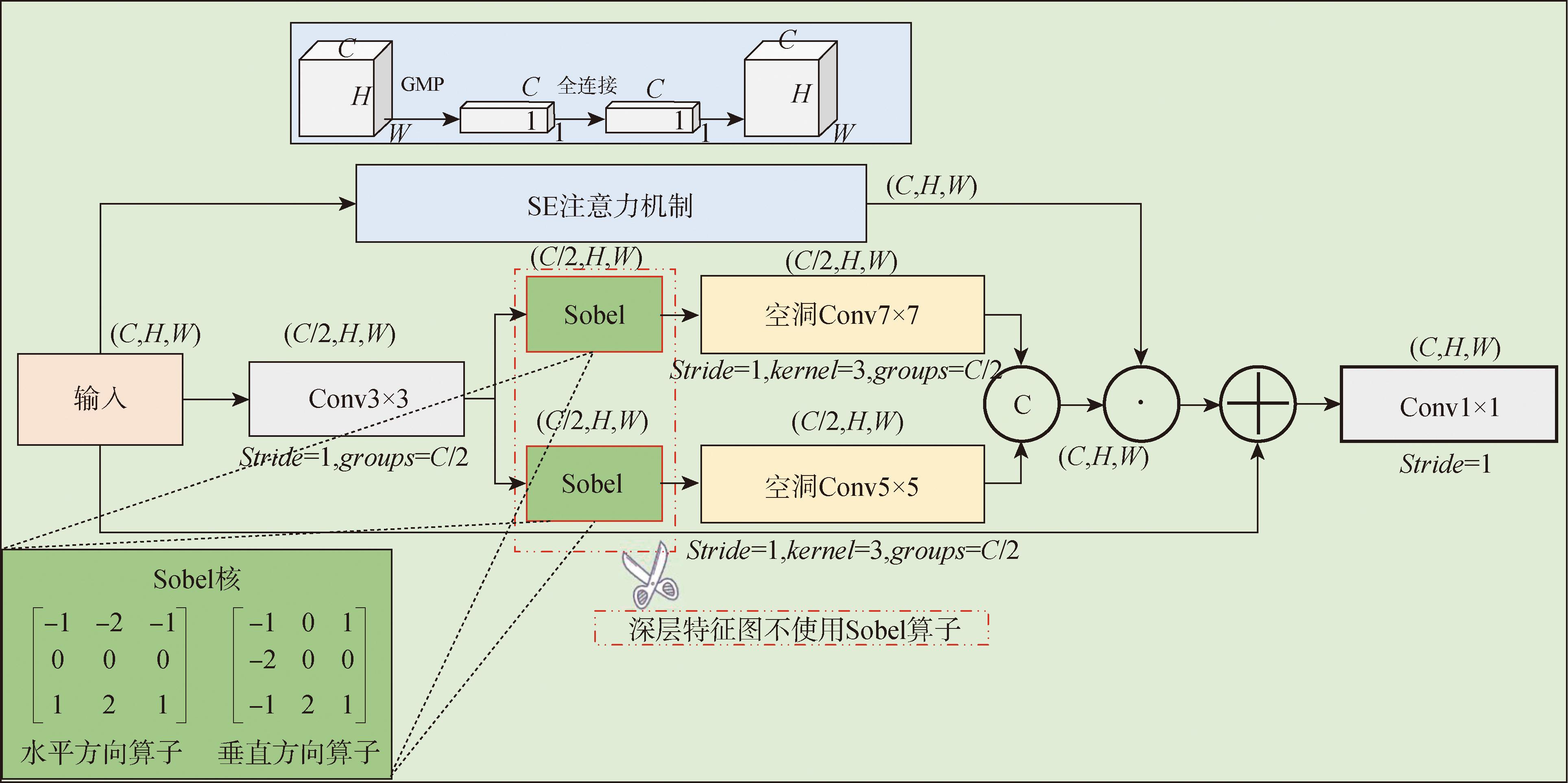
Fig.6 Network structure of shallow L-C2f

Fig.7 Statistical analysis of target distribution on SIRST-V2 and NUDT-SIRST datasets
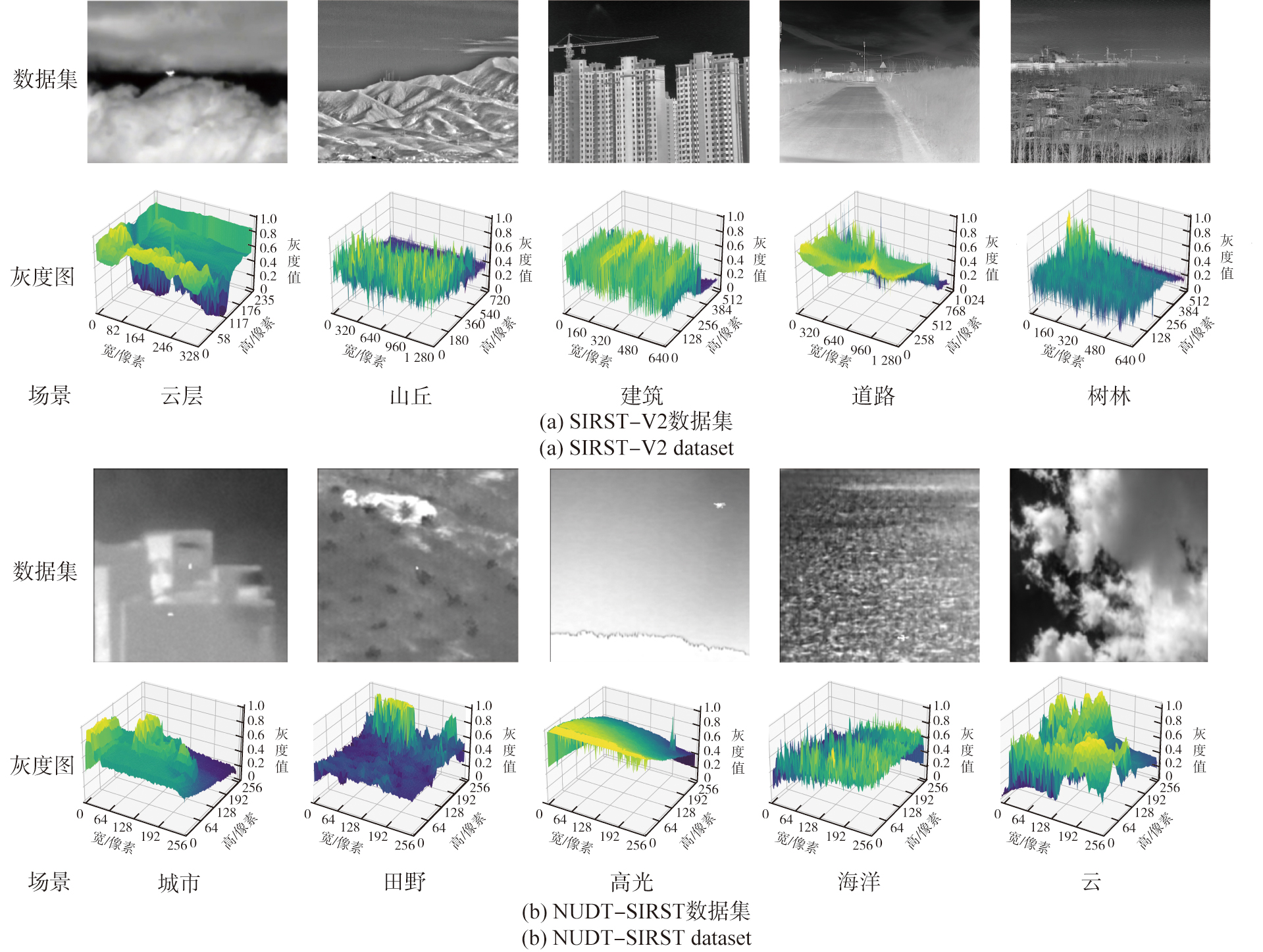
Fig.8 Typical image samples in SIRST-V2 and NUDT-SIRST datasets,their grayscale distribution diagrams and scene
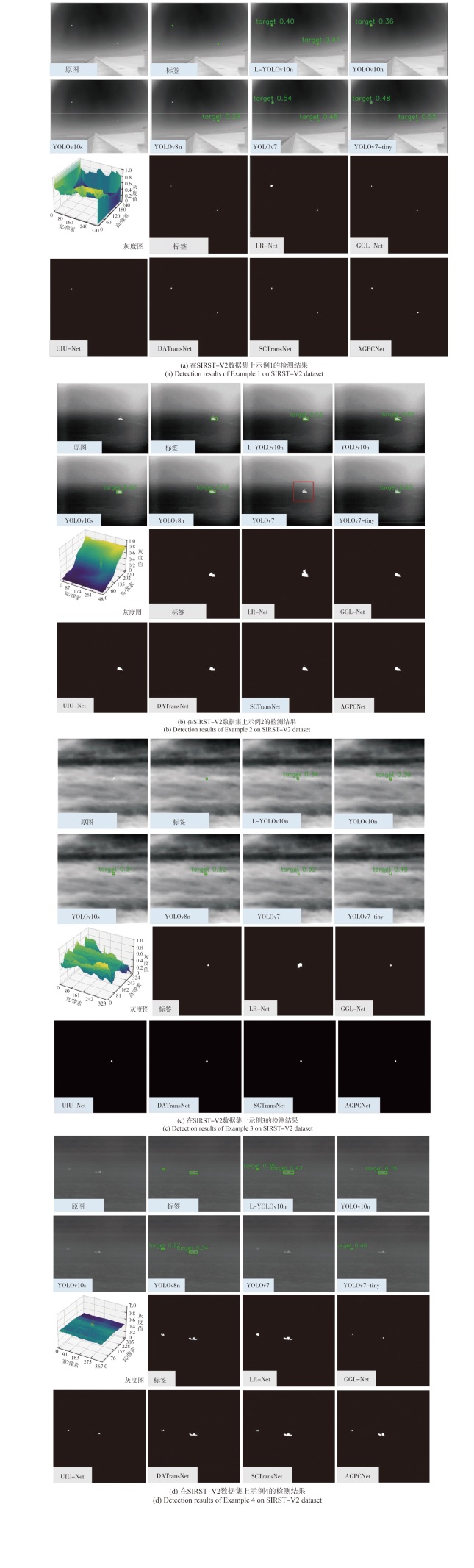
Fig.9 Comparison of visualization test results on SIRST-V2 dataset
| 编号 | 模型 | mIOU | F1 | Pd | Fa | FLOPs | Parameters |
|---|---|---|---|---|---|---|---|
| 1 | YOLOv10n | 0.441 | 0.612 | 0.56 | 0.323 | 6.7G | 2.3M |
| 2 | YOLOv10n+L-SCDown | 0.512 | 0.677 | 0.682 | 0.328 | 8.5 G | 2.9M |
| 3 | YOLOv10n+L-SCDown+L-C2f | 0.47 | 0.639 | 0.679 | 0.396 | 5.9 G | 2.3M |
| 4 | L-YOLOv10n | 0.5 | 0.667 | 0.738 | 0.392 | 5.9G | 2.3M |
Table 2 Ablation experiments to test the performances of various improved methods
| 编号 | 模型 | mIOU | F1 | Pd | Fa | FLOPs | Parameters |
|---|---|---|---|---|---|---|---|
| 1 | YOLOv10n | 0.441 | 0.612 | 0.56 | 0.323 | 6.7G | 2.3M |
| 2 | YOLOv10n+L-SCDown | 0.512 | 0.677 | 0.682 | 0.328 | 8.5 G | 2.9M |
| 3 | YOLOv10n+L-SCDown+L-C2f | 0.47 | 0.639 | 0.679 | 0.396 | 5.9 G | 2.3M |
| 4 | L-YOLOv10n | 0.5 | 0.667 | 0.738 | 0.392 | 5.9G | 2.3M |
| 编号 | 模型 | FLOPs | Parameters |
|---|---|---|---|
| 1 | SCDown | 0.443G | 0.036M |
| 2 | L-SCDown使用标准卷积 | 0.877G | 0.166M |
| 3 | L-SCDown使用空洞卷积 | 0.877G | 0.166M |
Table 4 Complexity analysis and verification of L-SCDown
| 编号 | 模型 | FLOPs | Parameters |
|---|---|---|---|
| 1 | SCDown | 0.443G | 0.036M |
| 2 | L-SCDown使用标准卷积 | 0.877G | 0.166M |
| 3 | L-SCDown使用空洞卷积 | 0.877G | 0.166M |
| 编号 | 模型 | FLOPs | Parameters |
|---|---|---|---|
| 1 | C2f | 1.023G | 0.079M |
| 3 | L-C2f | 0.279G | 0.023M |
Table 6 Complexity analysis and verification of L-C2f
| 编号 | 模型 | FLOPs | Parameters |
|---|---|---|---|
| 1 | C2f | 1.023G | 0.079M |
| 3 | L-C2f | 0.279G | 0.023M |
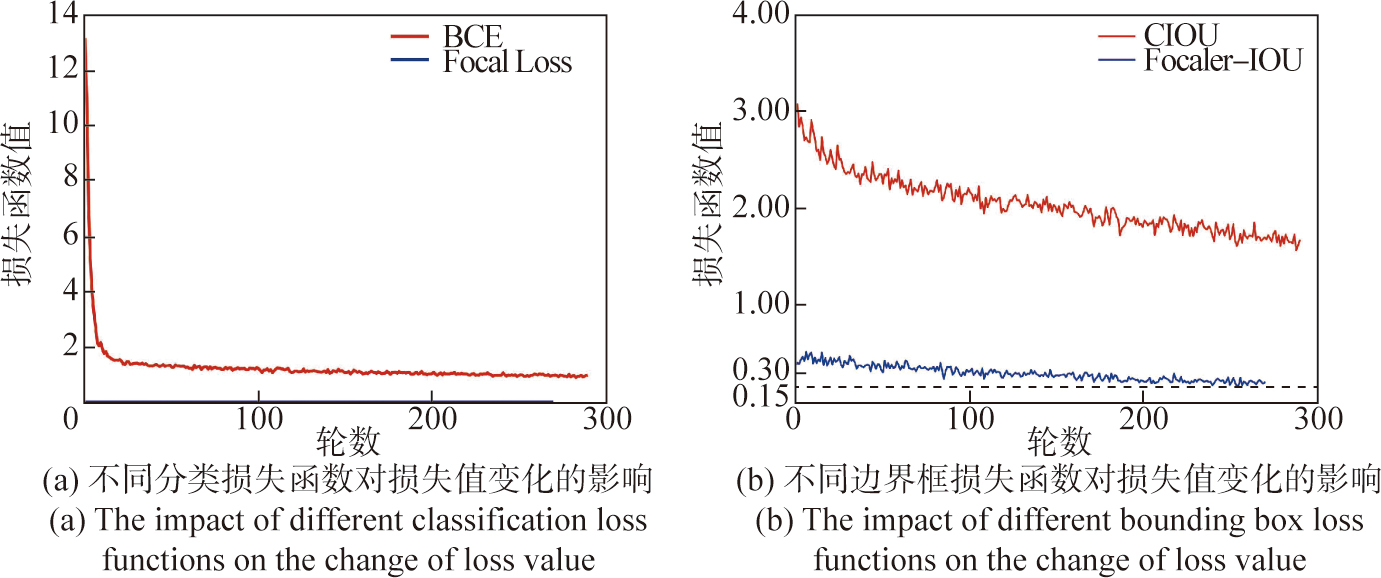
Fig.10 Performance analysis and experiment of loss function
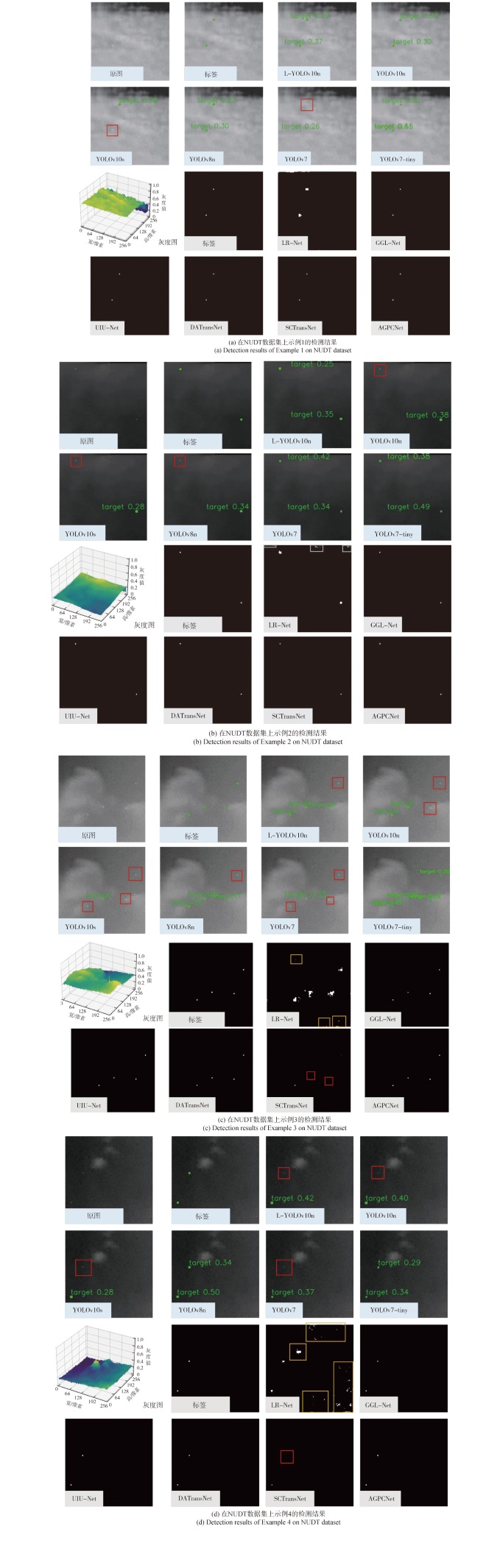
Fig.11 Comparison of visualization test results on NUDT dataset
| [7] |
doi: 10.3390/s23041865 URL |
| [8] |
|
| [9] |
|
| [10] |
|
| [11] |
doi: 10.1016/j.patcog.2023.109788 URL |
| [12] |
|
| [13] |
|
| [14] |
doi: 10.1109/TAES.2023.3238703 URL |
| [15] |
|
| [16] |
doi: 10.1016/j.eswa.2023.122212 URL |
| [17] |
|
| [18] |
|
| [19] |
|
| [20] |
|
| [21] |
|
| [22] |
doi: 10.1109/ACCESS.2025.3538556 URL |
| [23] |
|
| [24] |
|
| [25] |
doi: 10.1109/TIP.2022.3228497 URL |
| [26] |
|
| [1] |
熊远辉, 罗中杰, 于光保, 等. 分子Faraday旋光红外滤波成像技术研究[J]. 兵工学报, 2019, 40(7):1443-1449.
doi: 10.3969/j.issn.1000-1093.2019.07.014 |
|
doi: 10.3969/j.issn.1000-1093.2019.07.014 |
|
| [2] |
|
| [3] |
曾溢良, 蓝金辉, 邹金霖. 滑动置信度约束的红外弱小目标跟踪算法研究[J]. 兵工学报, 2017, 38(9):1771-1778.
doi: 10.3969/j.issn.1000-1093.2017.09.014 |
|
|
|
| [4] |
王强, 吴乐天, 李红, 等. 基于双支网络协作的红外弱小目标检测[J]. 兵工学报, 2023, 44(10):3165-3176.
doi: 10.12382/bgxb.2022.0605 |
|
|
|
| [5] |
|
| [6] |
|
| [27] |
doi: 10.3390/agronomy13051419 URL |
| [28] |
|
| [29] |
doi: 10.1007/s11042-024-18872-y |
| [30] |
|
| [31] |
doi: 10.1007/s00521-024-10453-2 |
| [1] | YAN Hao, LI Siyu, ZHAN Xianbiao, DONG Enzhi, WEN Liang, JIA Xisheng. Remaining Useful Life Prediction Method of Rolling Bearing Based on Frequency-domain TCAE-Informer [J]. Acta Armamentarii, 2025, 46(S1): 240619-. |
| [2] | HU Julin, HE Hongwen, HAN Xuefeng. A Multiple-road Type, Three-dimensional Driving Cycle Construction Method for Tracked Vehicles Based on Micro-motion Segments [J]. Acta Armamentarii, 2025, 46(9): 240881-. |
| [3] | WANG Lu, YAN Jiang, YIN Peng, LIU Yan, HUANG Fenglei. Optimal Allocation Algorithm of Firepower Resources Based on the Damage Characteristics [J]. Acta Armamentarii, 2025, 46(8): 240971-. |
| [4] | TAO Weihao, LUO Yasong, LIN Fajun, QU Jianjing, LIU Yiping. Marine Ship Target Segmentation Method Based on Improved DeepLabV3+ [J]. Acta Armamentarii, 2025, 46(8): 240912-. |
| [5] | MA Yuwei, WU Weichao, WANG Wei, NIU Ailin, GUO Zhiming, YANG Jianxin. Map Lightweight Processing and Staircase Area Classification Method for Indoor Navigation of Unmanned Ground Platforms [J]. Acta Armamentarii, 2025, 46(6): 240483-. |
| [6] | LUAN Yongchao, ZHANG Bin, LI Chenkai, CHU Wenbo, ZHAO Dong’e. A Measuring Method for Muzzle Velocity of Gun under Strong Smoke Interference [J]. Acta Armamentarii, 2025, 46(3): 240160-. |
| [7] | ZHAO Chunbo, MO Bo, LI Dawei, ZHAO Jie. Research on Motion Blur Object Detection Technology for Imaging Guidance [J]. Acta Armamentarii, 2025, 46(2): 240376-. |
| [8] | XU Tunan, GAO Ang, CHEN Yucheng, YAN Shoucheng, DENG Bin. A Lightweight Recognition Method for Low Altitude Targets in the Battlefield [J]. Acta Armamentarii, 2025, 46(2): 240170-. |
| [9] | YANG Chenchen, LIU Jun, HAN Fanghao, MEI Yue. Research on Dynamic Impact Response and Energy Dissipation Mechanisms of Auxetic Metamaterial Sandwich Structures with Negative Poisson’s Ratio Based on Material Point Method [J]. Acta Armamentarii, 2025, 46(10): 250507-. |
| [10] | XING Wensong, LONG Zhenhai, HUANG Jie. Analysis of Low-cycle Torsional Fatigue Properties of 42CrMo Based on Hysteresis Loop Data [J]. Acta Armamentarii, 2025, 46(1): 231163-. |
| [11] | FENG Yingbin, GUO Xiaozun, YAN Jiahua. Small UVA Target Detection Algorithm Based on Multi-scale Attention Mechanism [J]. Acta Armamentarii, 2025, 46(1): 231124-. |
| [12] | LIU Chengzhe, WANG Haifu, ZHANG Jiahao, ZHENG Yuanfeng. Research on Behavior of Lightweight High-entropy Alloy Jet Penetrating Concrete Targets [J]. Acta Armamentarii, 2024, 45(S1): 60-69. |
| [13] | QIAO Xinbo, ZHAO Yongqiang, ZHANG Jingcheng. Object Tracking Based on Spatial-polarization Aliasing for Infrared Polarization Video [J]. Acta Armamentarii, 2024, 45(9): 3274-3287. |
| [14] | YIN Guohua, QI Yongsheng, LIU Liqiang, SU Jianqiang, ZHANG Lijie. Lightweight and Fast Target Tracking Algorithm Based on Ghost-TiFPN [J]. Acta Armamentarii, 2024, 45(5): 1703-1716. |
| [15] | ZHAO Xiaoqiang, CHENG Wei. Lightweight Image Super-resolution Reconstruction Based on Cross-fusion of Spatial Features [J]. Acta Armamentarii, 2024, 45(4): 1273-1284. |
| Viewed | ||||||
|
Full text |
|
|||||
|
Abstract |
|
|||||
