


Responsible Institution: China Association for Science and Technology
Sponsor: China Ordnance Society
ISSN 1000-1093 CN 11-2176/TJ
Sponsor: China Ordnance Society
ISSN 1000-1093 CN 11-2176/TJ
Acta Armamentarii ›› 2025, Vol. 46 ›› Issue (11): 250217-.doi: 10.12382/bgxb.2025.0217
Previous Articles Next Articles
TAO Yubo1, LIN Xinyi1, HE Jie1, YUAN Zishun1,2,3,*( ), XU Wang4
Received:2025-03-26
Online:2025-11-27
Contact:
YUAN Zishun
CLC Number:
TAO Yubo, LIN Xinyi, HE Jie, YUAN Zishun, XU Wang. Application and Selection of Different Clustering Algorithms in the Processing of Impact-resistant Finite Element Simulation Results[J]. Acta Armamentarii, 2025, 46(11): 250217-.
Add to citation manager EndNote|Ris|BibTeX

Fig.1 Yarn FE model

Fig.2 Bulletproof fabrics and bullet FE model
| 材料参数 | 符号 | Twaron®纱线 | 弹丸 |
|---|---|---|---|
| 密度/(g·mm-3) | ρ | 1.44×10⁻³ | 7.800×10⁻³ |
| 屈服应力/MPa | σ | 3.95×10³ | 刚体 |
| 断裂应变/% | ε | 1.00×10⁻⁶ | 刚体 |
| 杨氏模量/MPa | E1 | 7.20×10⁴ | 2.068×10⁵ |
| E2 | 900 | ||
| E3 | 900 | ||
| 泊松比 | ν12 | 0.01 | 0.300 |
| ν13 | 0.01 | ||
| ν23 | 0.01 | ||
| 剪切模量/MPa | G12 | 360.00 | |
| G13 | 360.00 | ||
| G23 | 360.00 |
Table 1 Material parameters of finite element model
| 材料参数 | 符号 | Twaron®纱线 | 弹丸 |
|---|---|---|---|
| 密度/(g·mm-3) | ρ | 1.44×10⁻³ | 7.800×10⁻³ |
| 屈服应力/MPa | σ | 3.95×10³ | 刚体 |
| 断裂应变/% | ε | 1.00×10⁻⁶ | 刚体 |
| 杨氏模量/MPa | E1 | 7.20×10⁴ | 2.068×10⁵ |
| E2 | 900 | ||
| E3 | 900 | ||
| 泊松比 | ν12 | 0.01 | 0.300 |
| ν13 | 0.01 | ||
| ν23 | 0.01 | ||
| 剪切模量/MPa | G12 | 360.00 | |
| G13 | 360.00 | ||
| G23 | 360.00 |
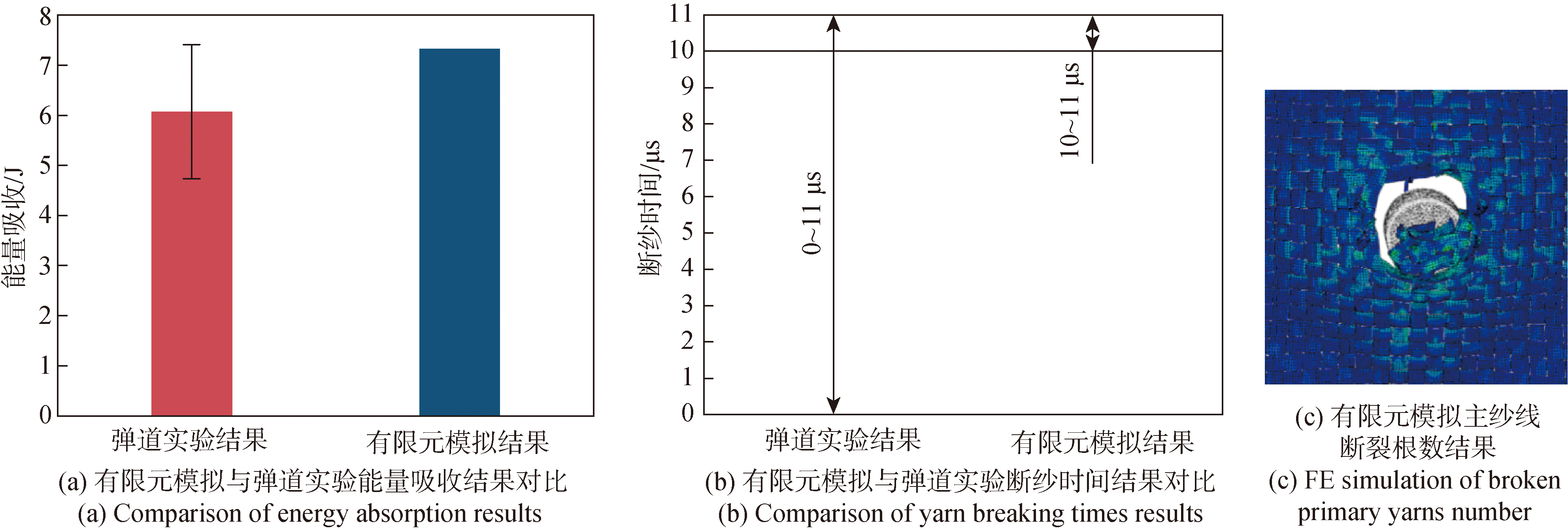
Fig.3 Comparison of finite element simulation and ballistic experimental results
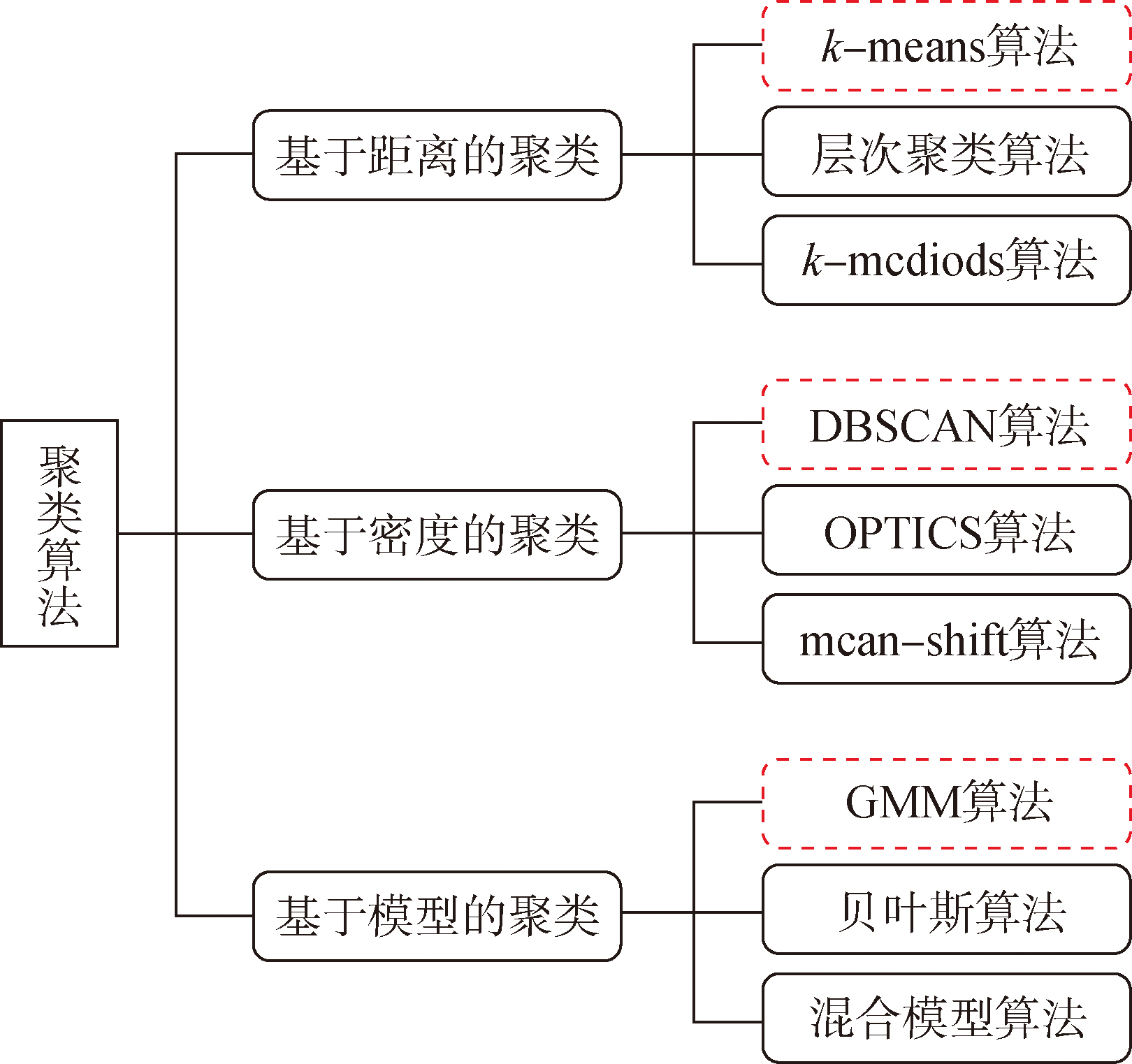
Fig.4 Brief classification of clustering algorithms
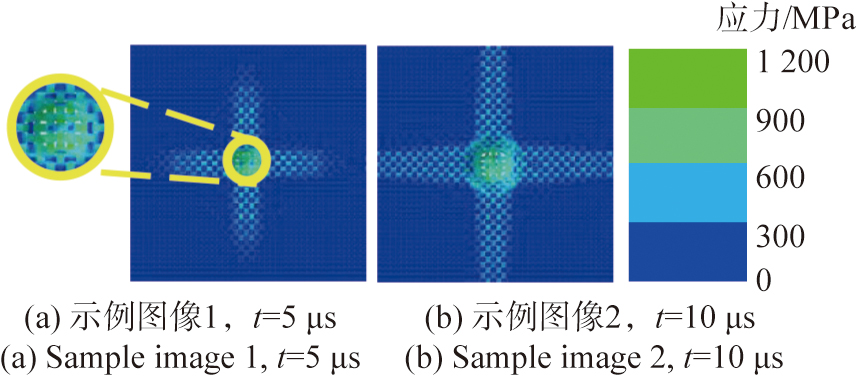
Fig.5 Sample image

Fig.6 Example images manually processed using ImageJ® software

Fig.7 Image processing results using Mean-Shift clustering algorithm

Fig.8 Image processing results using Mean-Shift clustering algorithm
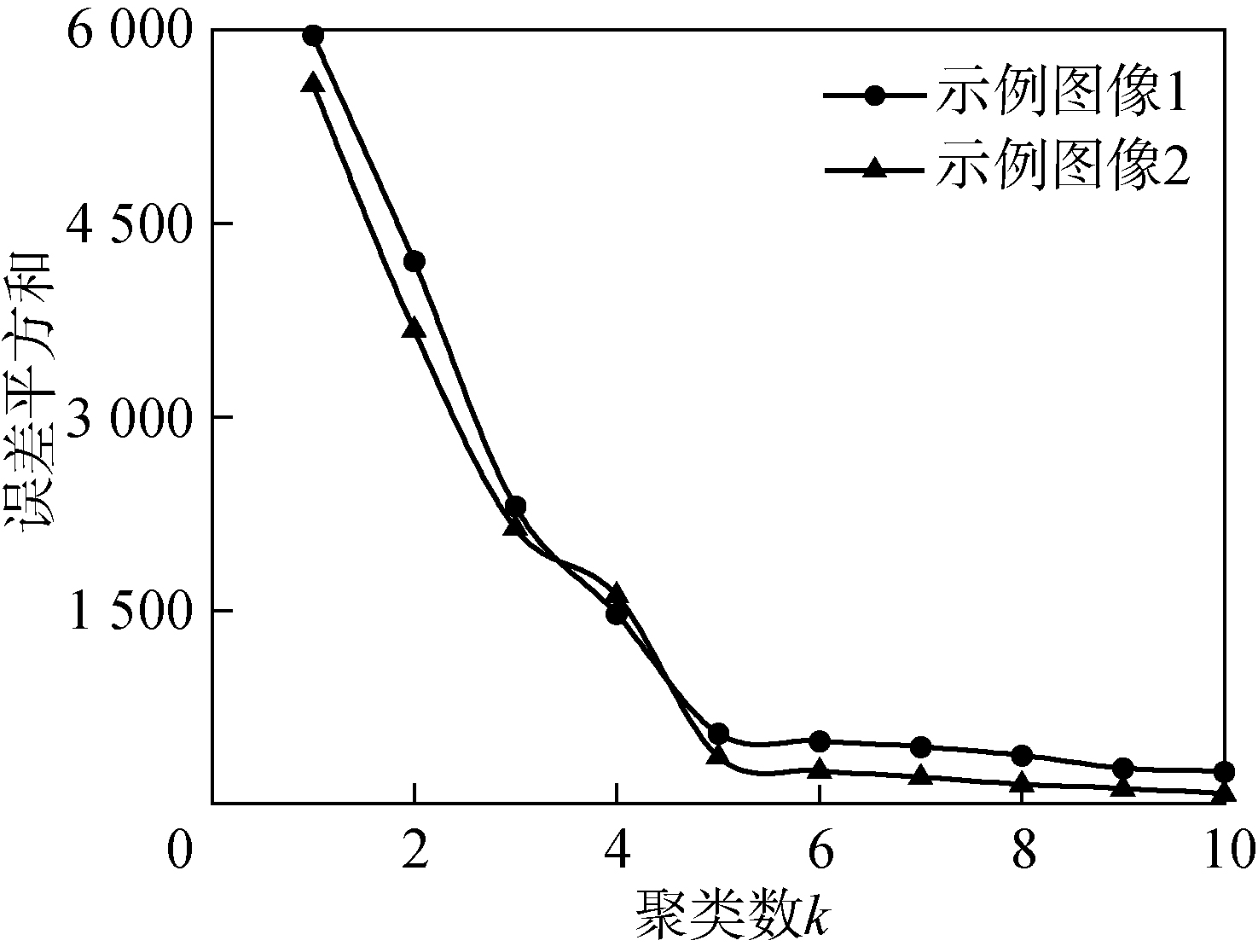
Fig.9 Sum of error squares and the elbow plot of SSE and cluster number k

Fig.10 Image processing results using the k-means clustering algorithm

Fig.11 The processed results of the GMM clustering algorithm

Fig.12 Comparison among the processed results of two algorithms and the manual processing results
| 应力区间/ MPa | k-means算法 | GMM算法 | ||
|---|---|---|---|---|
| 绝对误差/ mm2 | 相对误 差/% | 绝对误差/ mm2 | 相对误差/ % | |
| 0~300 | 2.12 | 0.17 | 971.41 | 80.18 |
| 300~600 | 1.83 | 0.12 | 971.73 | 61.25 |
| 600~900 | 0.62 | 0.35 | 2.65 | 1.49 |
| 900~1200 | 0.50 | 0.22 | 2.67 | 1.16 |
Table 2 The errors of processing the example image 1 by two algorithms
| 应力区间/ MPa | k-means算法 | GMM算法 | ||
|---|---|---|---|---|
| 绝对误差/ mm2 | 相对误 差/% | 绝对误差/ mm2 | 相对误差/ % | |
| 0~300 | 2.12 | 0.17 | 971.41 | 80.18 |
| 300~600 | 1.83 | 0.12 | 971.73 | 61.25 |
| 600~900 | 0.62 | 0.35 | 2.65 | 1.49 |
| 900~1200 | 0.50 | 0.22 | 2.67 | 1.16 |
| 应力区间/ MPa | k-means算法 | GMM算法 | ||
|---|---|---|---|---|
| 绝对误差/ mm2 | 相对误 差/% | 绝对误差/ mm2 | 相对误差/ % | |
| 0~300 | 3.11 | 0.27 | 1 280.35 | 112.81 |
| 300~600 | 2.99 | 0.21 | 1280.33 | 87.95 |
| 600~900 | 1.39 | 0.85 | 4.81 | 2.93 |
| 900~1200 | 1.44 | 0.32 | 5.09 | 1.14 |
Table 3 The errors of prodrssing the example image 2 by two algorithms
| 应力区间/ MPa | k-means算法 | GMM算法 | ||
|---|---|---|---|---|
| 绝对误差/ mm2 | 相对误 差/% | 绝对误差/ mm2 | 相对误差/ % | |
| 0~300 | 3.11 | 0.27 | 1 280.35 | 112.81 |
| 300~600 | 2.99 | 0.21 | 1280.33 | 87.95 |
| 600~900 | 1.39 | 0.85 | 4.81 | 2.93 |
| 900~1200 | 1.44 | 0.32 | 5.09 | 1.14 |

Fig.13 The processeed image results of the k-means clustering algorithm
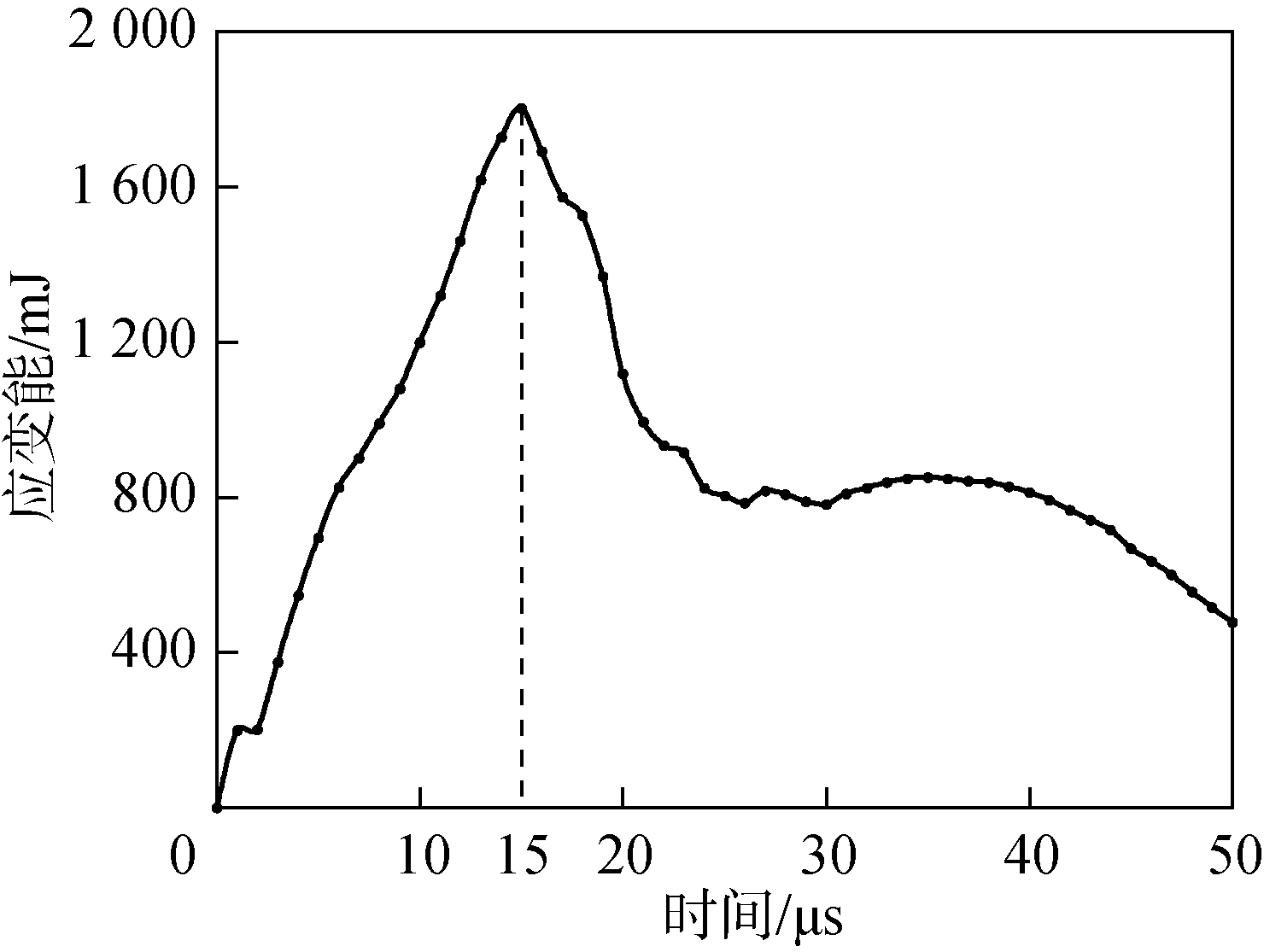
Fig.14 Change in train energy in the overall model
| [1] |
郭金基, 梁浩云, 许兆銮, 等. 防弹模拟靶动态应力和位移的测定及分析[J]. 系统工程与电子技术, 1993, 15(10):70-74.
|
|
|
|
| [2] |
doi: 10.1177/0040517516671129 URL |
| [3] |
doi: 10.1016/j.ijmecsci.2023.108247 URL |
| [4] |
doi: 10.1016/j.ijmecsci.2024.109630 URL |
| [5] |
王纪龙, 温垚珂, 刘东旭, 等. 基于键基近场动力学对防弹插板在步枪弹侵彻下的力学响应仿真[J]. 兵工学报, 2024, 45(11):4094-4105.
doi: 10.12382/bgxb.2024.0275 |
|
doi: 10.12382/bgxb.2024.0275 |
|
| [6] |
汪萌, 温垚珂, 徐诚, 等. 步枪弹侵彻背部穿硬防护人体靶标钝击效应研究[J]. 兵器装备工程学报, 2024, 45(4):119-127.
|
|
|
|
| [7] |
doi: 10.1016/j.compstruct.2020.111855 URL |
| [8] |
doi: 10.1016/j.compbiomed.2021.104379 URL |
| [9] |
doi: 10.1016/j.compstruct.2023.116869 URL |
| [10] |
解亚宸, 黄广炎, 张宏, 等. UHMWPE纤维二维织物抗弹道冲击性能[J]. 兵工学报, 2022, 43(9):2152-2163.
|
|
doi: 10.12382/bgxb.2021.0648 |
|
| [11] |
马王菲, 胡裕鹏, 袁子舜, 等. 层后空间对防弹织物防护性能的影响[J]. 纺织高校基础科学学报, 2023, 36(6):8-14.
|
|
|
|
| [12] |
甄泓, 肖李军, 杜成鑫, 等. 在弹道冲击条件下超高分子量聚乙烯纤维复合材料板破坏模式[J]. 兵工学报, 2025, 46(7):240725.
doi: 10.12382/bgxb.2024.0725 |
|
doi: 10.12382/bgxb.2024.0725 |
|
| [13] |
doi: 10.1007/s12206-019-0917-6 |
| [14] |
|
| [15] |
doi: 10.1177/004051757304300105 URL |
| [16] |
|
| [17] |
doi: 10.1016/0015-0568(80)90011-1 URL |
| [18] |
袁子舜, 陆振乾, 许玥, 等. 超高分子量聚乙烯纤维平纹织物-单向布混合堆叠板的防弹机制[J]. 复合材料学报, 2022, 39(6):2707-2715.
|
|
|
|
| [19] |
|
| [20] |
doi: 10.1038/s41598-023-36049-9 |
| [21] |
黄旭, 张世义, 李军. 图像分割技术研究综述[J]. 装备机械, 2021, 176(2):6-9.
|
|
|
|
| [22] |
刘燕萍, 郭佩瑶, 吴莹. 面向织物疵点检测的深度学习技术应用研究进展[J]. 纺织学报, 2024, 45(12):234-242.
doi: 10.13475/j.fzxb.20240102302 |
|
doi: 10.13475/j.fzxb.20240102302 |
|
| [23] |
林国宇. 基于聚类的图像分割研究综述[J]. 电脑知识与技术, 2022, 18(26):17-18,24.
|
|
|
|
| [24] |
胡群, 张宁, 潘如如. 应用均值漂移的印花面料交互式换色方法[J]. 纺织学报, 2021, 42 (11):97-102.
doi: 10.13475/j.fzxb.20201103806 |
|
doi: 10.13475/j.fzxb.20201103806 |
|
| [25] |
doi: 10.1016/j.compag.2019.104962 URL |
| [26] |
|
| [27] |
何洁, 徐平华, 袁子舜, 等. 基于机器学习的UD布弹道冲击有限元结果分析[J]. 轻工机械, 2024, 42(4):7-15.
|
|
|
|
| [28] |
|
| [29] |
doi: 10.1016/j.aca.2012.03.008 URL |
| [1] | ZHAO Zhijie, SHEN Shiqi, YING Zhanfeng, LI Keting, LI Ruixing, TANG Shiwei. Aerial Vehicle Detection based on Multispectral Feature Fusion in Complex Scene [J]. Acta Armamentarii, 2025, 46(S1): 250413-. |
| [2] | CHEN Bin, WANG Song, LIU Xingyu, ZHANG Zhaohui, LI Wuyang. A Human Head Finite Element Model for Blunt Ballistic Impact Injury Assessment [J]. Acta Armamentarii, 2025, 46(8): 241022-. |
| [3] | LIU Aoxin, ZHANG Jiahao, ZHOU Sheng, LI Peiyu, CHEN Pengwan, LIU Rui, WANG Haifu. Research on Blasting Damage Behavior of Reactive Projectile Penetrating into Ceramic Target [J]. Acta Armamentarii, 2025, 46(6): 240521-. |
| [4] | XU Tongle, WANG Zhaochen, LIU Fang, XIAO Yujie, HE Yi, DOU Jihua. Aircraft Flight Corridor Conflict Detection Method Based on Multi-view Geometry [J]. Acta Armamentarii, 2025, 46(5): 240806-. |
| [5] | JIN Yue, MIAO Fuxing. Impact Resistance and Energy Absorption Properties of CFRP Thin-walled Circular Tube with Porous Arrays [J]. Acta Armamentarii, 2025, 46(2): 240074-. |
| [6] | YANG Haowei, WANG Junlong, MIAO Zhenwei, KANG Yue, WEI Yanpeng. Research on the Application of Shear-stiffening Gel Modified Foam Materials in Ballistic Helmets [J]. Acta Armamentarii, 2025, 46(11): 250225-250225. |
| [7] | KONG Xiangqing, LI Ruonan, CHANG Yahui, FU Ying. Numerical Simulation of Blast Resistance of Foam-filled Auxetic Honeycomb Sandwich Structures [J]. Acta Armamentarii, 2024, 45(9): 3091-3104. |
| [8] | XIANG Xinmei, LUO Linlin, FU Zushu, HE Shizhu. Effect of Gradient Mode on Mechanical Properties of Miura-ori Metamaterials [J]. Acta Armamentarii, 2024, 45(2): 618-627. |
| [9] | LIU Teng, ZHOU Xiongfei, WANG Chengquan, JING Lin. Wheel-rail Interaction Mechanism and Derailment Suppression Technology for Train Collision Accidents [J]. Acta Armamentarii, 2023, 44(S1): 67-78. |
| [10] | HUI Kanghua, YANG Wei, LIU Haohan, ZHANG Zhi, ZHENG Jin, BAI Xiao. Enhanced Multi-scale Target Detection Method Based on YOLOv5 [J]. Acta Armamentarii, 2023, 44(9): 2600-2610. |
| [11] | FAN Boyang, ZHAO Gaopeng, BO Yuming, WU Xiang. Collaborative Task Allocation Method for Multi-Target Air-Ground Heterogeneous Unmanned System [J]. Acta Armamentarii, 2023, 44(6): 1564-1575. |
| [12] | JIANG Xinhao, CAI Wei, ZHANG Zhili, JIANG Bo, YANG Zhiyong, WANG Xin. Camouflaged Object Segmentation Based on COSNet [J]. Acta Armamentarii, 2023, 44(5): 1456-1468. |
| [13] | NIU Cao, GU Guangxin, ZHU Lei, XU Hongbin, LI Zhengyu, ZHANG Weihong, CHEN Yongwei, WANG Bo, SHI Jianxiong, LI Yizhe. Finite Element Structural Analysis and Topology Optimization of a Vehicle-borne Missile Launching Cradle [J]. Acta Armamentarii, 2023, 44(2): 437-451. |
| [14] | GAO Jun-qiang, TANG Xia-qing, HUANG Xiang-yuan, CHENG Xu-wei. FEA Method for Analysis of SINS Error Caused by Vibration Isolation System [J]. Acta Armamentarii, 2016, 37(9): 1570-1577. |
| [15] | XU Xiao, FAN Li-xia, WANG Ya-ping, DONG Xiao-bin. Trans-scale Polycrystalline Finite Element Simulation of Radial Forging Process for Barrel and Prediction of Texture [J]. Acta Armamentarii, 2016, 37(7): 1180-1186. |
| Viewed | ||||||
|
Full text |
|
|||||
|
Abstract |
|
|||||
